Charter buses for church trips, retreats and youth groups
Count everyone, and note the ages
Count everyone who rides: students, leaders, volunteers and staff. Then match the total to a bus: a Sprinter seats up to 15, a mini bus up to 26 and a coach bus up to 56. If sign-ups sit near a cutoff, price the larger bus now. Changes you make after booking aren't in the original price.
Note the age mix too. Younger kids need more leaders spread through the bus. Older members need more time to board and seats near the door.
Retreat luggage
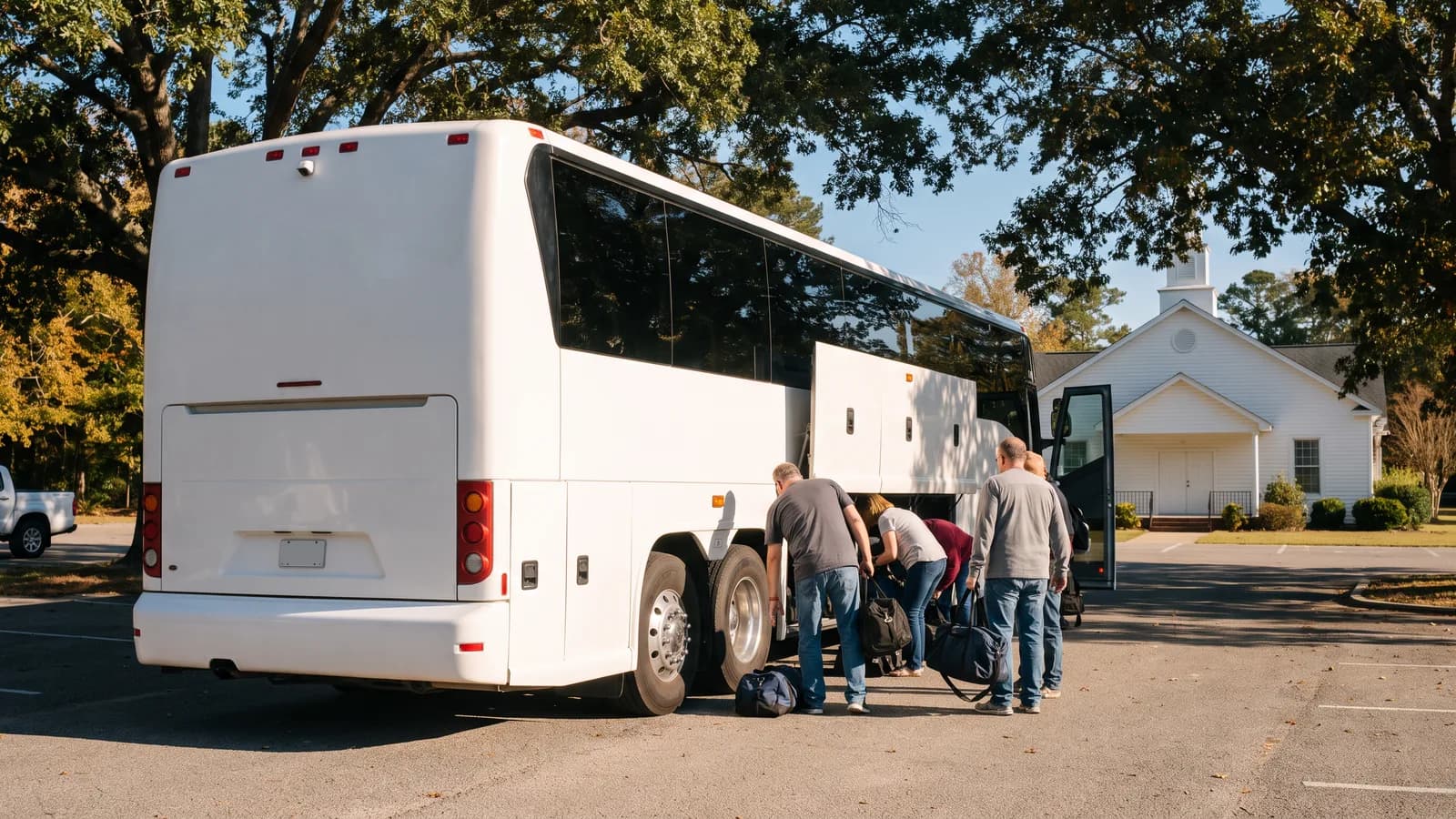
On a coach bus, bags ride in the baggage compartment under the passenger deck. That compartment is what federal rules use to define the vehicle (49 CFR 37.3). A Sprinter carries bags in the space behind the last row, and a mini bus in a rear compartment or an under-floor bay, depending on the model: far less room either way, so check before people pack. Charter bus sizes explains the difference. Set Luggage to “Heavy (checked bags / gear)” when you get your price, so the match leans toward a bus with the room, and list anything bulky in Anything else?.
Count bags the way you count people. A suitcase, a sleeping bag and a pillow per person add up fast. Put a bag limit in the packing list, and tell us about bulky items, like instruments, sound gear or supply bins for a service project, before you book.
Food, drinks, coolers and car seats for small children follow the operator's rules. Tell us at booking what you plan to bring, and we'll confirm it with the operator.

Day trip, overnight or multi-day
The instant price covers a day trip, with buses added past 56 people: a day retreat, a youth outing, a choir's visit to another congregation, or a mission team's ride to the airport. It covers an overnight retreat or a multi-day trip too.
For an overnight or multi-day trip, choose Round trip and set the return date to the day you head home. The bus stays with your group: add the hours you'll use it on each day between, or leave a day blank if it stays parked. Not keeping the bus? Book two one-way trips, one out and one back. The driver's room on an overnight is the group's cost, within reason, on top of the price, and so is the bus's overnight parking if your hotel doesn't allow buses.
If the bus stays with you, plan the driver's nights too. Before driving again, the driver needs 8 consecutive hours off duty. A weekly cap applies on top: no driving after 60 hours on duty in 7 days, or 70 in 8 if the operator runs buses every day (49 CFR 395.5). A late campfire and an early start the next morning may not both fit, and on a week-long trip the hours add up.
Sunday and weekday timing
You set the pickup and departure times, and the operator's goal is to have the bus there by then, or earlier. Leaving after a service? Pick a time that leaves room for goodbyes, restroom stops and loading. A weekday outing for retirees can leave mid-morning and be home before the evening rush.
A same-day trip to a conference several hours away can be longer than one driver may work. A bus driver may drive up to 10 hours and may not drive after 15 hours on duty (49 CFR 395.5). The driver-hours guide shows when a day needs a second driver or an overnight. When yours does, the instant price includes it; enter your real pickup and return times.
Lift access and older members
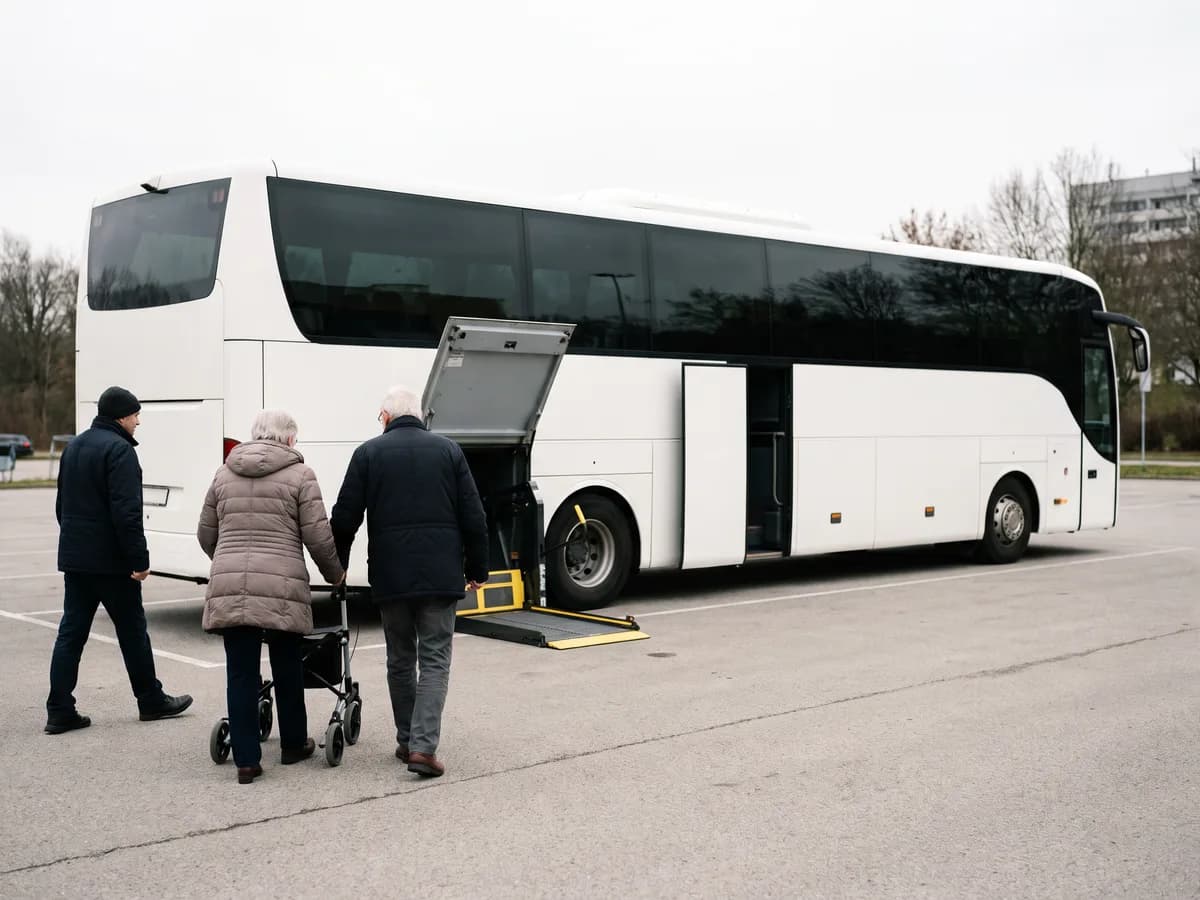
Tick the wheelchair-lift box when you get your price. Lift-equipped buses are available on advance request, and the lift is confirmed with you before the trip. Charter buses are covered by the ADA. A charter coach operator may ask for up to 48 hours' notice, and with less notice must still provide an accessible bus if it can with a reasonable effort (49 CFR 37.189). Earlier is better.
The lift isn't only for wheelchair users. A rider with a disability who doesn't use one, such as a member with a walker who can't manage coach steps, may use the lift to board (49 CFR 37.165).
Tell us how many people will stay in their wheelchairs on board. If more wheelchair users want to ride than the bus has securement spots, spots go first come, first served, and everyone else is offered help boarding and a regular seat (49 CFR 37.205). At rest stops, riders with disabilities can get off and back on like everyone else, with help from the operator, including running the lift (49 CFR 37.201).
What to send attendees
Pick the pickup spot before you tell anyone: somewhere a coach can pull in, load and pull out without backing up, clear of Sunday parking. Then send one short message a week out.
- Arrival time and departure time, as two separate times.
- Where the bus parks: the exact spot, like “the side lot by the east doors,” not just the church address.
- What to bring, and the bag limit if you're on a smaller bus.
- The expected return time, and where people get picked up.
- A trip leader's cell number for the day. You get the driver's name and number the day before the trip; keep that with your leaders.
Collecting money from attendees
A small deposit books the bus. The balance is charged 14 days before the trip, with an email 7 days before; a trip booked 14 days out or closer is paid in full when you book. Pay by card or bank; the price includes any tax. If the church needs an invoice in its name, ask for one. Set your sign-up and payment deadline before the balance date, so late forms don't hold up the trip.
Gratuity, tolls and parking are already in the price, and nothing is added at pickup, so no one needs to pass an envelope for the driver.
Planner checklist
- Headcount includes leaders, volunteers and staff
- Age mix noted: kids, teens, older members
- Bus size picked, with room if sign-ups grow
- Bags counted, bag limit set, bulky items listed
- Day trip, or overnight/multi-day (set the return date to the day you head home)
- Driver's overnight rest planned for multi-day trips
- Pickup and departure times set, with room after the service
- Wheelchair lift requested, with how many riders stay in their chairs
- Seats near the door saved for members who need them
- Attendee message sent: times, where the bus parks, what to bring, a leader's number
- Sign-up and payment deadline set before the balance date
- Driver's name and number kept with the trip leaders
What the instant price covers
Instant price: one day or more, any headcount (past 56 people the form adds buses), such as a day retreat, a youth outing or a mission team's airport drop-off, all-in (driver, fuel, gratuity, tolls, parking, repositioning miles and any tax). Extra stops go in the form, and an overnight or multi-day retreat gets an instant price too (Round trip, with a later return date); the driver's room, and overnight parking where the hotel doesn't allow buses, are the group's cost on top.
How the price is built, what it includes and how booking works: How it works.
Common questions
Can the bus stay with us for a weekend retreat?
Yes. Choose Round trip and set the return date to the day you head home, and the instant price covers the bus for the whole weekend. Add the hours you'll use it on the days between. If the bus should drop you off and come back instead, book two one-way trips.
Is the driver's tip included?
Yes. Gratuity is in the price, along with fuel, tolls, parking and repositioning miles. Nothing is added at pickup.
One of our members uses a wheelchair. What should we do?
Tick the wheelchair-lift box when you get your price, and tell us whether they'll ride in their chair or move to a seat. Lift-equipped buses are available on advance request, and the lift is confirmed with you before the trip.
Our group grew after we booked. Now what?
Call (704) 368-1515. More people may mean a bigger bus, and changes you make after booking aren't in the original price.
Our mission team is flying out. Can you get us to the airport?
The ride to the airport is one bus for one day, which the instant price covers. The form asks for the flight number when an address is an airport. If the team comes back on a different day, book the return as its own one-way trip; booked together as one trip, the days in between are charged too.
Keep planning
- How far can a charter bus go in a day?Federal rules give charter bus drivers 10 hours of driving and 15 on duty. What counts, how trucking differs, and when a day needs a second driver.
- Which charter bus fits your group?Sprinter, mini bus or coach bus? How seats, luggage, restrooms and wheelchair lifts differ, and what to do past 56 riders.
- Booking a charter bus for a school field tripDistrict rules, school bus vs. coach bus, loading zones and chaperones: what to settle before you book a field-trip charter bus.
- Wedding shuttle buses, planned around your dayPlan wedding guest shuttles: hotel-to-venue timing, how many buses or runs, alcohol and decoration rules, wheelchair lifts, and what to tell guests.
- Plan a group trip by charter busField trips, church retreats, team travel, corporate events, weddings and public-agency trips: a planner for each, plus how to pick the right bus.
Sources
Based on the primary sources below and fact-checked line by line, last on October 7, 2026. Rules change: the operator confirms what applies to your trip, and (704) 368-1515 answers questions 24/7.
- 49 CFR 37.3: an over-the-road bus is a bus characterized by an elevated passenger deck located over a baggage compartment. eCFR · checked 2026-10-05
- ADA Title III applies to privately operated transit; ADA.gov lists “Intercity and charter buses” as examples. ADA.gov · checked 2026-10-07
- 49 CFR 37.189(b)–(d): a demand-responsive over-the-road bus operator must provide an accessible bus to a passenger with a disability who requests one, may require up to 48 hours' advance notice, and without that notice must still provide it if it can with a reasonable effort. eCFR · checked 2026-10-07
- 49 CFR 37.165(g): transportation entities must permit individuals with disabilities who do not use wheelchairs, including standees, to use a vehicle's lift or ramp to enter the vehicle. eCFR · checked 2026-10-05
- 49 CFR 37.205: if more wheelchair users seek to travel than there are securement locations, the operator assigns them first come, first served, and must offer the others boarding assistance and the opportunity to sit in a vehicle seat. eCFR · checked 2026-10-05
- 49 CFR 37.201(a): at rest stops, a passenger with a disability may leave and return to the bus on the same basis as other passengers, and the operator must ensure assistance as needed (e.g., operating the lift). eCFR · checked 2026-10-07
- 49 CFR 395.5(a): a passenger-carrying CMV driver may not drive more than 10 hours, or drive after having been on duty 15 hours, following 8 consecutive hours off duty. eCFR · checked 2026-10-07
- 49 CFR 395.5(b): no driving a passenger-carrying CMV after 60 hours on duty in any 7 consecutive days if the carrier does not operate every day of the week, or after 70 hours on duty in any 8 consecutive days if it does. eCFR · checked 2026-10-07
Photos are illustrative. Your bus is the size you book; its make, model, colors and markings vary by operator.