Booking a charter bus for a school field trip
Start with your district's rules
Read your district's field-trip or transportation policy before you get a price. It may say who approves the trip, which vehicles are allowed and what a bus company must provide. Some districts set their own rules for charter coaches, and some require a school bus for certain trips.
Book once the trip has a date and an approval. If you have to hold a date while approval is pending, know the refund line first. Cancel 14 or more days before the trip and you get 100% back; 7 to 13 days, 50%; under 7 days, nothing. If no operator can be found, or the operator can't run and can't be replaced, everything is refunded.
What vendor approval will want to see
SimpleShuttles owns no buses. Your trip runs with an independent bus operator from its vetted network. Before booking, each operator is checked for active FMCSA passenger authority, current insurance, a safety rating that isn't Unsatisfactory or Conditional, no out-of-service order, and a fleet that fits the trip.
Your confirmation email gives the operator's USDOT number and a link to its record on FMCSA's SAFER system. SAFER shows the operator's safety rating (if it has one), a summary of roadside out-of-service inspections and crash information. Forward the email to whoever approves vendors. Need the operator's certificate of insurance naming the district? Ask once your operator is confirmed and we'll send it within 3 business days, along with our W-9.
Coach bus or school bus?
In federal safety rules, “school bus” isn't a color. It's a bus sold for carrying students to and from school or related events (49 CFR 571.3), built to its own federal standards for emergency exits, seating, crashworthiness and rollover protection (49 U.S.C. 30125).
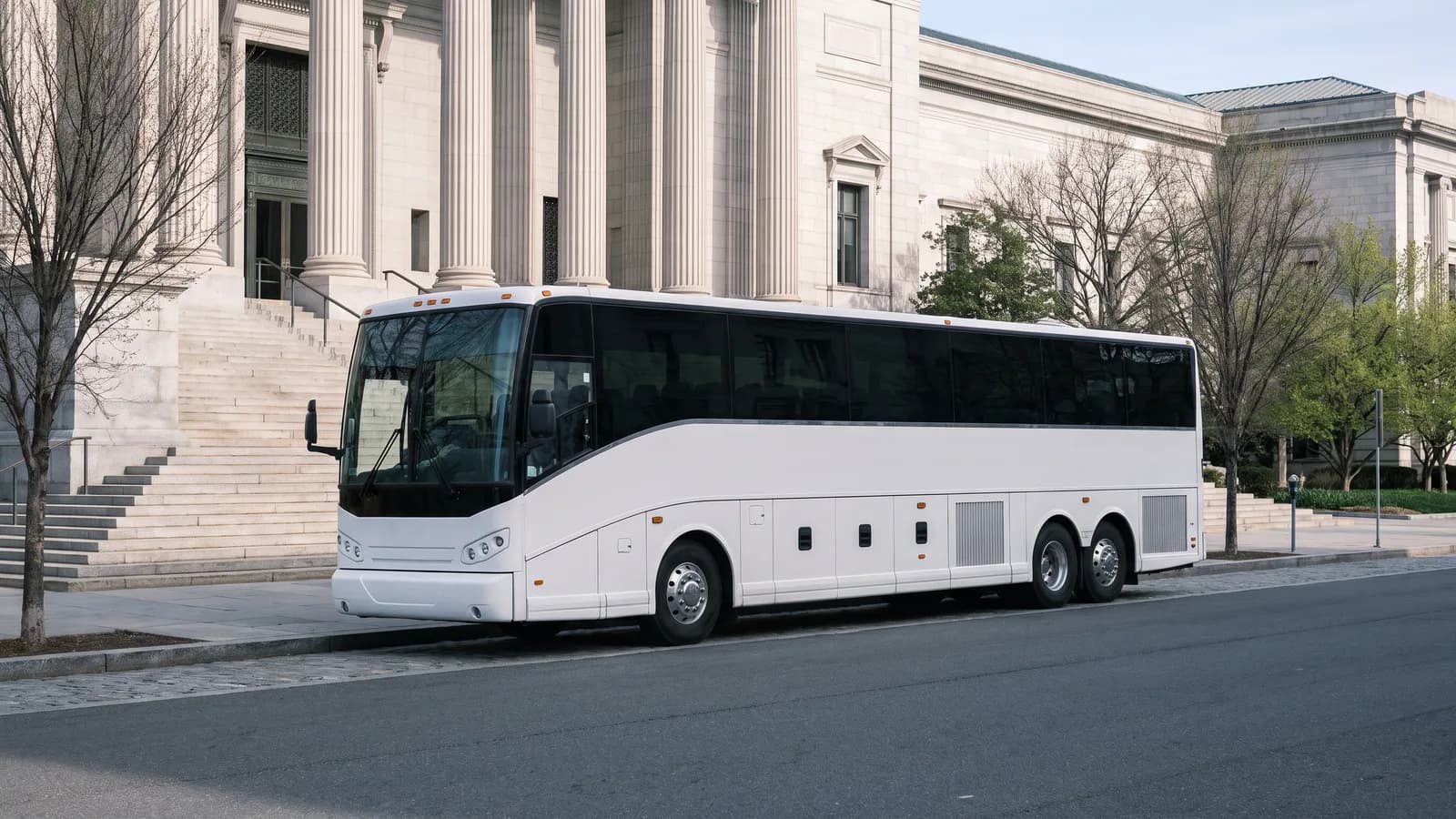
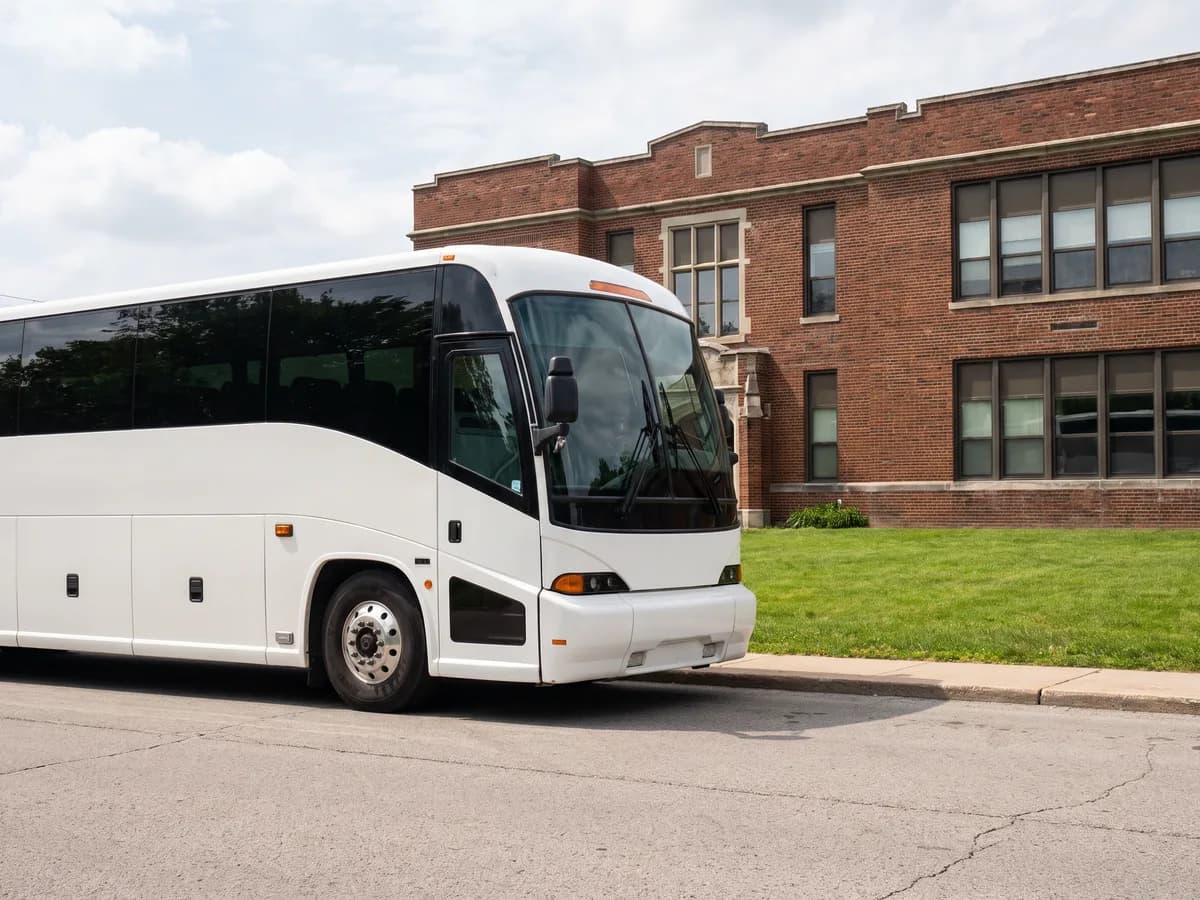
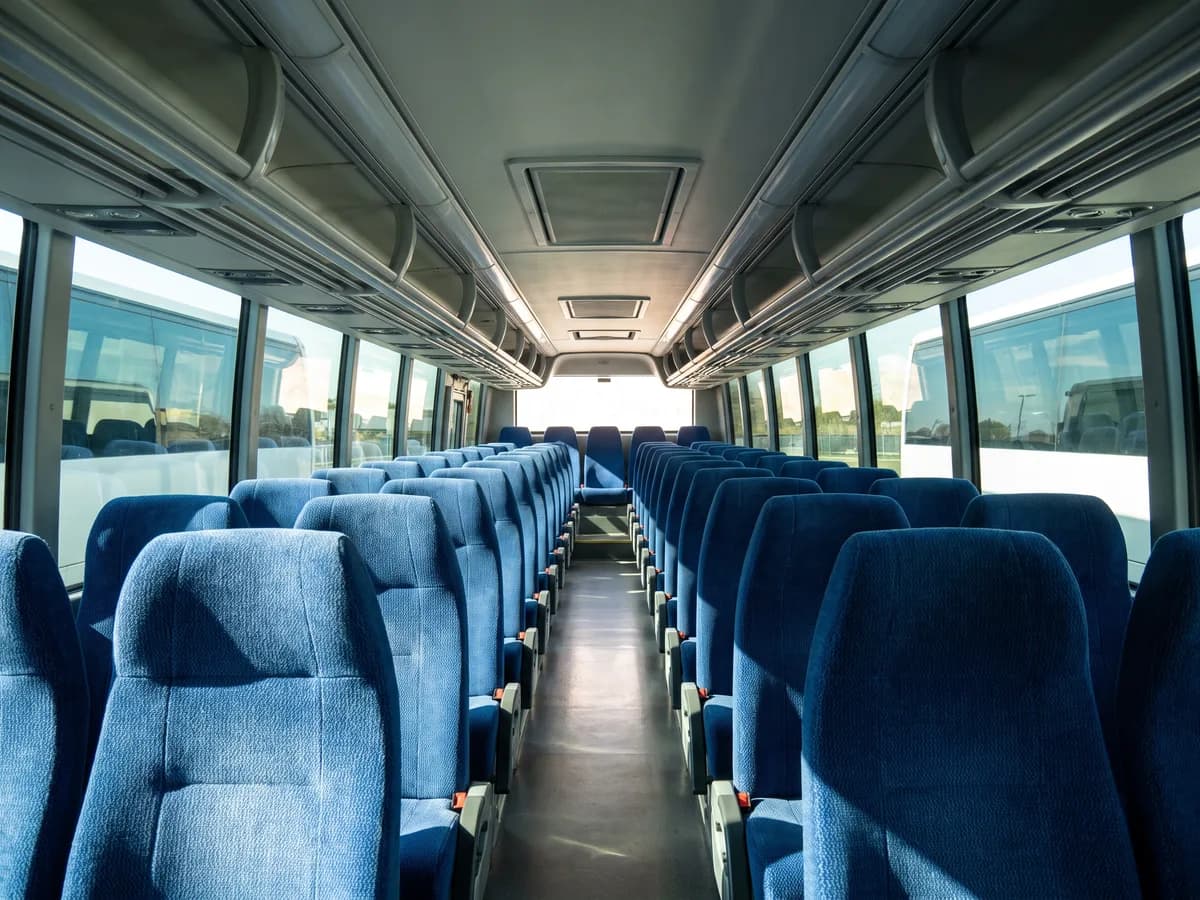
The buses arranged here are charter vehicles: Sprinters for up to 15, mini buses for up to 26 and coach buses for up to 56. If your policy calls for a school bus on this trip, start with your transportation office.
California schools
California school trips need SPAB-certified drivers. The form asks whether a California trip is a K-12 school trip, and for one we confirm a SPAB-certified driver with you before the trip. Under the California Vehicle Code, a charter bus a school hires to take students in grade 12 or below to a school activity is generally a “school pupil activity bus,” and its driver needs a state SPAB certificate (§§ 546, 12517).
What to have ready before you get a price
Each of these changes which bus fits or how the day runs.
- Headcount, including chaperones and staff. Every adult takes a seat, so count them with the students.
- A loading zone. Pick a straight stretch of curb away from car-rider lines, where a full-size coach can pull in and leave going forward. Tell the front office where it is.
- The timeline: report time, departure, arrival, time on site, departure from the venue and return. Ask the venue where buses unload and park.
- Accessibility needs. Tick the wheelchair-lift box when you get your price. Lift-equipped buses are available on advance request, and the lift is confirmed with you before the trip. Federal rules let a charter coach operator ask for up to 48 hours' notice (49 CFR 37.189), so raise it as soon as you know.
- Medical and emergency information. Permission slips, medication plans and emergency contacts stay with your trip lead. The driver doesn't need them.
Fit the day to the driver's hours
A bus driver may drive up to 10 hours and may not drive after 15 hours on duty, both counted from 8 consecutive hours off (49 CFR 395.5). The driver's day starts before your pickup and ends after the drop-off, and time spent waiting with the bus usually counts. A far destination plus a full day on site can run past the limit. The driver-hours guide has a calculator that shows when a day needs a second driver or an overnight.
Chaperones on the bus
Your school or district sets the chaperone ratio. On board, spread chaperones through the coach instead of grouping them at the front, and give one lead the roster.
Count heads at every boarding, including the ride home. The day before the trip, the operator confirms the driver and bus, and you get the driver's name and number. Share it with every chaperone.
Paying for the trip
A small deposit books the trip. The balance is charged 14 days before the trip, with an email 7 days before; a trip booked 14 days out or closer is paid in full when you book. Pay by card or bank, and a district purchase card works like any other card; the all-in price includes any tax. Need an invoice in the district's name or a W-9 for vendor approval? Ask for them. Purchase orders and checks are possible for some districts: call (704) 368-1515 before you book.
Planner checklist
- District approval and field-trip transportation policy checked
- Charter coach allowed for this trip (or a school bus required)
- Headcount includes chaperones and staff
- Loading zone picked and shared with the front office
- Venue's bus unloading and parking spot confirmed
- Timeline written: report, depart, arrive, leave venue, return
- Wheelchair lift requested early, if needed
- Medical forms and emergency contacts with the trip lead
- Day checked against the driver's 10-hour driving and 15-hour on-duty limits
- Confirmation email (USDOT number and SAFER link) sent to whoever approves vendors
- Driver's name and number shared with every chaperone
What the instant price covers
Instant price: one day or more, any headcount (past 56 people the form adds buses), such as a class going to one destination and back, all-in (driver, fuel, gratuity, tolls, parking, repositioning miles and any tax). Extra stops go in the form, and an overnight trip gets an instant price too (Round trip, with a later return date). California school trips need SPAB-certified drivers and can't be booked yet.
How the price is built, what it includes and how booking works: How it works.
Common questions
Can you send a yellow school bus?
No. SimpleShuttles arranges charter Sprinters, mini buses and coach buses, never yellow school buses or school activity buses. If your district requires a school bus for this trip, book it through your transportation office.
A whole grade is going. Can we book two buses online?
The instant price covers one day, with extra stops entered in the form; a stop doesn't change the price unless it adds a lot of miles. Past 56 people the form adds buses and prices each one.
Do chaperones need cash for the driver?
No. Gratuity, tolls and parking are in the price, and nothing is added at pickup.
How can our district check the bus company?
On FMCSA's SAFER system. Your confirmation email, sent once the deposit is paid, gives the operator's USDOT number and a direct link to its record. The operator isn't named before the deposit.
Keep planning
- How far can a charter bus go in a day?Federal rules give charter bus drivers 10 hours of driving and 15 on duty. What counts, how trucking differs, and when a day needs a second driver.
- Which charter bus fits your group?Sprinter, mini bus or coach bus? How seats, luggage, restrooms and wheelchair lifts differ, and what to do past 56 riders.
- Charter buses for sports teamsPlan a team bus: where gear rides, setting departure from warm-up time, whether a long away game fits one driver, and tournament weekends.
- Charter buses for church trips, retreats and youth groupsPlan a church trip or retreat by bus: sizing for mixed ages, retreat luggage, lift access for older members, Sunday timing and multi-day driver rest.
- Plan a group trip by charter busField trips, church retreats, team travel, corporate events, weddings and public-agency trips: a planner for each, plus how to pick the right bus.
Sources
Based on the primary sources below and fact-checked line by line, last on October 7, 2026. Rules change: the operator confirms what applies to your trip, and (704) 368-1515 answers questions 24/7.
- 49 CFR 571.3(b): a “bus” is a motor vehicle with motive power, except a trailer, designed for carrying more than 10 persons; a “school bus” is a bus sold, or introduced in interstate commerce, for purposes that include carrying students to and from school or related events, excluding a bus designed and sold for operation as a common carrier in urban transportation. eCFR · checked 2026-10-07
- Federal law directs school bus safety standards covering emergency exits, interior occupant protection, floor strength, seating systems, body and frame crashworthiness (including rollover protection), vehicle operating systems, windows and windshields, and fuel systems. 49 U.S.C. 30125(b) · checked 2026-10-05
- California Vehicle Code § 546 defines a “school pupil activity bus” as a motor vehicle other than a schoolbus, operated by a common carrier, public transit system or passenger charter-party carrier under contract with a school, carrying pupils at or below 12th grade to or from a school activity; it does not apply to an interstate carrier bringing pupils into or back to the state on a school activity trip. leginfo.legislature.ca.gov · checked 2026-10-05
- California Vehicle Code § 12517(b): a school pupil activity bus driver carrying pupils at or below 12th grade to school activities needs a passenger-endorsed license for the vehicle class and a DMV certificate to operate school pupil activity buses. leginfo.legislature.ca.gov · checked 2026-10-05
- 49 CFR 37.189(c)–(d): a demand-responsive over-the-road bus operator may require up to 48 hours' advance notice to provide an accessible bus, and without that notice must still provide it if it can with a reasonable effort. eCFR · checked 2026-10-07
- 49 CFR 395.5(a): a passenger-carrying CMV driver may not drive more than 10 hours, or drive after having been on duty 15 hours, following 8 consecutive hours off duty. eCFR · checked 2026-10-07
- FMCSA's SAFER Company Snapshot can be searched by USDOT number, MC/MX number or company name and shows a company's identification, size, safety rating (if any), a roadside out-of-service inspection summary and crash information. safer.fmcsa.dot.gov · checked 2026-10-07
Photos are illustrative. Your bus is the size you book; its make, model, colors and markings vary by operator.