Plan a group trip by charter bus

Pick your trip
Each guide covers the rules and decisions that matter for that kind of group.
- School field trips: district approval, school bus vs. coach bus, loading zones and chaperones.
- Church groups and retreats: one bus for every age, retreat luggage, Sunday timing and lift access for older members.
- Sports teams: where the gear rides, setting departure from warm-up time, and whether a long away game fits one driver.
- Corporate events: staging a coach at a hotel or venue, accessibility on registration, and what your risk team can check.
- Wedding shuttles: the four times to fix first, more buses vs. more runs, and the rules on alcohol and decorations.
- Government agencies: W-9s, SAM.gov and schedules, paying before service, and ADA duties for public events.
Which bus for your group?
Start with headcount, counting every chaperone, coach and staff member. A Sprinter seats up to 15, a mini bus up to 26 and a coach bus up to 56. More than 56 means a second bus, which the form adds and prices.
Then check what else needs room. Federal rules call a coach bus an over-the-road bus: its passenger deck sits over a baggage compartment (49 CFR 37.3), so bags and gear ride underneath. If anyone uses a wheelchair, tick the wheelchair-lift box when you get your price, or tell us as soon as you know. Charter coach operators may ask for up to 48 hours' notice (49 CFR 37.189), and an accessible coach has at least two wheelchair spaces (49 CFR 38.159). Charter bus sizes compares the three classes.
Last, check the driver's day. A bus driver may drive up to 10 hours and may not drive after 15 hours on duty (49 CFR 395.5), and waiting with the bus usually counts as on duty (49 CFR 395.2). A long drive plus a full day on site can need a second driver or an overnight. The driver-hours guide has a calculator that shows which.

Online or by phone
One day or more, any headcount, gets an instant all-in price online (past 56 people the form adds buses): driver, fuel, gratuity, tolls, parking and repositioning miles, with nothing added at pickup. A bus running back and forth all day is the form's Shuttle trip type. An overnight or multi-day round trip gets an instant price too: set the return date to the day you head home, and the bus stays with your group. The driver's hotel room, and the bus's overnight parking if your hotel doesn't allow buses, are your group's cost on top.
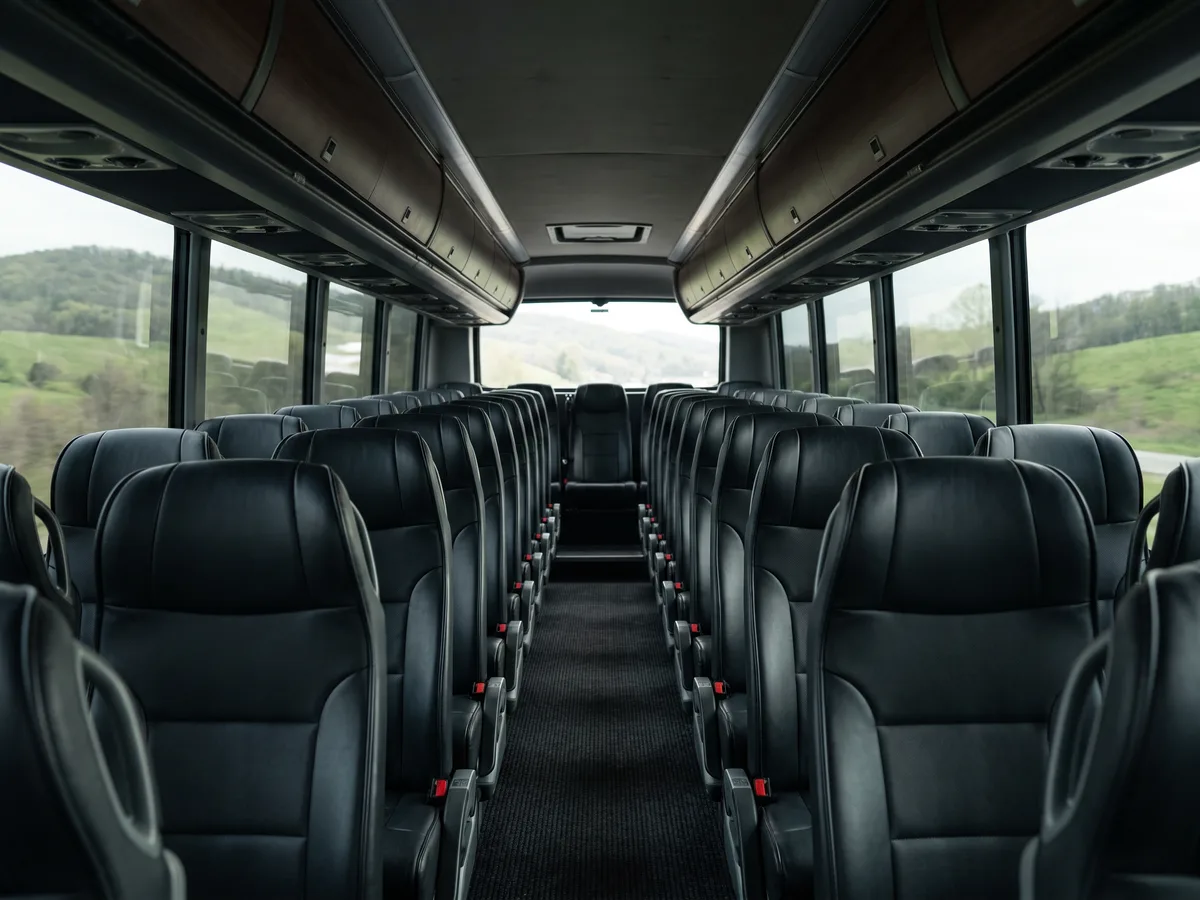
What the instant price covers
Instant price: one day or more, any headcount (past 56 people the form adds buses), all-in (driver, fuel, gratuity, tolls, parking, repositioning miles and any tax). Extra stops go in the form. A shuttle between two points is the Shuttle trip type. A round trip that comes back on a later day keeps the bus with the group.
How the price is built, what it includes and how booking works: How it works.
Common questions
Our trip doesn't fit any of these. Can we still book?
Yes, for any size of group: get an instant price online, and past 56 people the form adds buses. Extra stops go in the form, and a long day that needs a second driver or a driver's overnight is priced in. A shuttle between two points is its own trip type in the form. A multi-day trip works too: choose Round trip, set the return date to the day you head home and add the hours you'll use the bus each day.
Is the driver's tip included?
Yes. The price includes the driver, fuel, gratuity, tolls, parking and repositioning miles. Nothing is added at pickup.
Who runs the bus?
An independent operator from the SimpleShuttles network. SimpleShuttles owns no buses. Every operator is vetted before booking, and your confirmation email gives its USDOT number and a link to its FMCSA SAFER record.
Keep planning
- Which charter bus fits your group?Sprinter, mini bus or coach bus? How seats, luggage, restrooms and wheelchair lifts differ, and what to do past 56 riders.
- How far can a charter bus go in a day?Federal rules give charter bus drivers 10 hours of driving and 15 on duty. What counts, how trucking differs, and when a day needs a second driver.
Sources
Based on the primary sources below and fact-checked line by line, last on October 7, 2026. Rules change: the operator confirms what applies to your trip, and (704) 368-1515 answers questions 24/7.
- 49 CFR 37.3 defines an over-the-road bus as a bus characterized by an elevated passenger deck located over a baggage compartment. eCFR · checked 2026-10-05
- 49 CFR 37.189(c)–(d): a demand-responsive (charter/tour) over-the-road bus operator may require up to 48 hours' advance notice for an accessible bus, and without that notice must still provide one if it can with a reasonable effort. eCFR · checked 2026-10-07
- 49 CFR 38.159(a)(1): an accessible over-the-road bus must have a lift or ramp and at least two securement locations and devices. eCFR · checked 2026-10-07
- 49 CFR 395.5(a): a passenger-carrying CMV driver may not drive more than 10 hours, or drive after 15 hours on duty, following 8 consecutive hours off duty. eCFR · checked 2026-10-07
- 49 CFR 395.2: on-duty time includes waiting unless relieved from duty, inspecting the vehicle, all time in or on the vehicle (with narrow exceptions), loading and unloading, and remaining in readiness to operate it. eCFR · checked 2026-10-07
- FMCSA's SAFER Company Snapshot can be searched by USDOT number, MC/MX number or company name and shows a company's identification, size, safety rating (if any), a roadside out-of-service inspection summary and crash information. safer.fmcsa.dot.gov · checked 2026-10-07
Photos are illustrative. Your bus is the size you book; its make, model, colors and markings vary by operator.